Quick answer
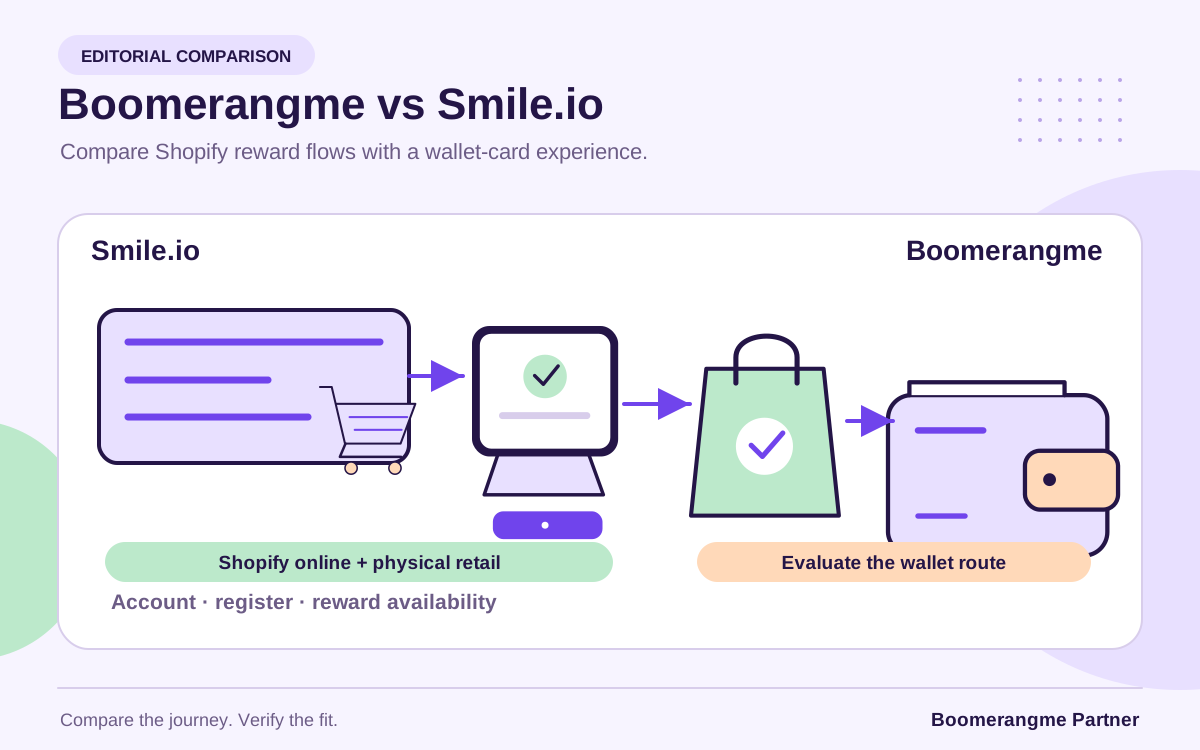
Boomerangme versus Smile.io is most useful when you separate two needs: rewards inside your Shopify shopping experience and a recognizable digital card customers can keep in their wallet. Smile’s official materials document substantial Shopify capabilities, including physical retail. Boomerangme merits consideration when its card experience and supported connection fit your offer.
This guide uses official documentation checked on October 5, 2026. It is not a hands-on test, and it does not claim that a reward feature shown on either provider’s website is available on every platform, plan, or checkout.
What Smile already does in physical retail
Smile’s Shopify POS page documents a register tile, staff prompts, and one points balance across online and store purchases. It should not be described as ecommerce-only. If your stores already use Shopify POS, that documented native workflow is a meaningful advantage to evaluate.
Its reward-type guide differentiates online and POS availability. Some online rewards are not listed for Shopify POS, and certain rewards require specific plans. That is a limitation to review, not a reason to dismiss the whole platform.
| Need | Smile.io | Boomerangme |
|---|---|---|
| Shopify register flow | POS tile and staff prompts documented | Confirm chosen POS integration route |
| Online/store balance | Unified Shopify balance documented | Test identity across intended connections |
| Reward coverage | Varies by platform and plan | Varies by card and connector |
| Customer-facing emphasis | Shopify reward experience | Wallet reward-card experience |
Where Smile may be the stronger fit
A Shopify retailer with a well-developed customer account journey may value keeping rewards where shoppers already review orders. If the business relies on both Shopify POS and web sales, native register tools can reduce staff switching between systems.
That does not make setup effortless. You still need earning rules, reward economics, staff training, and communication permissions. But when the required workflow is explicitly supported by a Shopify-focused provider, that is a legitimate reason to shortlist it.
Ask which rewards you need in store. A free shipping reward makes sense online but not at a physical register. A free product can behave differently from a fixed discount. Demonstrate the actual reward rather than comparing only broad labels such as “points” or “VIP.”
Where Boomerangme’s card approach can fit
Boomerangme’s digital reward cards offer a wallet-based way to show rewards. That may suit a business whose repeat engagement happens away from the ecommerce account: customers return to a local counter or visit after seeing a saved card.
The Shopify integration documentation distinguishes the ready-made Shopify connection from a custom-app Shopify POS route. The ready-made route is cashback-only and uses a storefront widget; the POS route lists several card types but specifies manual stamp or reward accrual. Confirm the exact connection before mapping a broad card toolkit onto Shopify checkout.
This is why a feature-rich platform can still be the wrong fit for one deployment. You need the relevant feature at the relevant touchpoint, not merely somewhere in the product family.
Compare a return visit across channels
Create one test customer and a small eligible order. Buy online, check progress, then visit the store and attempt redemption. Reverse the direction for a second test. Check whether staff identify the same customer and whether the balance shown is authoritative.
Repeat with a guest purchase, mixed eligible and excluded items, and an email address typed differently. Then process a partial refund after the customer has redeemed a reward. Verify the receipt, net payment, and final balance.
On the phone, check that the promised reward information is easy to find. On the register, have someone unfamiliar with the setup follow written steps. Record problems as your own evaluation, not as invented public performance statistics.
Migration is a customer-account project
A merchant asking whether a Smile launch is worthwhile raises the right broader concern: does the program cause useful behavior after setup? A new provider will not automatically solve a reward customers do not value.
Before switching, map customer identifiers, points, earned rewards, discount codes, expiry, and tier status. Ask how pending rewards and already-issued coupons move. Define which system remains authoritative during the cutover and how customers receive clear instructions.
Request current pricing for your required plan and order volume. Include POS, messaging, connectors, and implementation. Keep reward fulfillment in the budget; subscription savings can disappear if the new offer is more generous than intended.
Frequently asked questions
Is Smile.io only for online stores?
No. Official Smile documentation covers Shopify POS and a shared online/store points balance. Verify reward availability on the channel and plan you require.
Can every Boomerangme card type use the ready-made Shopify connection?
No. The cited connection guide says that route is cashback-only. A different POS connection has different mechanics and setup requirements.
Should wallet visibility decide the whole comparison?
No. It matters if customers use it, but earning, redemption, refunds, and staff workflow are equally important. Test all of them with the same offer.
Explore the wallet-card fit
If a digital card is central to your retention plan, explore Boomerangme and validate its precise Shopify route against your online and in-store requirements. Explore Boomerangme.
Sources & further reading
- Smile Shopify POS featuresPOS tiles and unified online/in-store points.
- Smile supported reward typesReward availability differs by platform and plan.
- Boomerangme Shopify integrationSeparate Shopify and POS connection routes.
- Boomerangme digital reward cardsWallet-based customer reward cards.
Sources reviewed October 5, 2026. Numerical examples are illustrative unless a cited source states otherwise.