How to Design Loyalty Rewards Customers Want and You Can Afford
Design loyalty rewards that customers understand and your business can afford, using realistic thresholds, cost calculations, clear terms, and pilot tests.

Design rewards customers understand, keep the economics clear, and measure the results.
Start with your business, or the question on your mind.
Design loyalty rewards that customers understand and your business can afford, using realistic thresholds, cost calculations, clear terms, and pilot tests.
Measure loyalty program ROI using incremental contribution, reward costs, useful customer metrics, and clear comparisons instead of counting all member sales.
Find why customers ignore loyalty programs and improve enrollment, reward clarity, staff consistency, and the first return visit without bigger discounts.
Write helpful loyalty push notifications with clear reward updates, sensible timing, relevant audiences, and device tests before sending a campaign.
Launch a local business loyalty program in 30 days with a practical plan for rewards, checkout testing, staff training, customer enrollment, and review.
Budget for a loyalty program using software, rewards, staff time, devices, integrations, and ongoing support instead of comparing subscription prices alone.
A shared loyalty card needs shared rules, accurate branch reporting, and clear responsibility for reward costs. Test permissions and settlement before expanding.
Honor existing rewards, choose a clear conversion policy, and test digital balances before retiring paper cards. Migration is a customer promise as well as a data task.
A price cut and a future reward create different commitments. Compare their contribution cost, customer behavior, and operational burden before choosing an offer.
See where Boomerangme can give local businesses an advantage: a practical launch route, visible rewards, and a program built around the next visit.
Wallet-based rewards put loyalty closer to a customer’s everyday routine. See why this direction makes Boomerangme worth considering for your business.
Learn from Starbucks Rewards tiers without copying a chain-sized program. Plan affordable VIP benefits, clear progress, and a small local-business pilot.
Turn holiday shoppers into repeat customers with a clear second-visit offer, useful timing, permission-based follow-up, and a practical retention scorecard.
Build a useful win-back campaign for inactive loyalty customers. Match timing to purchase cycles, separate service issues, and measure incremental contribution.
Choose a birthday loyalty reward customers can use and your business can afford. Plan eligibility, redemption timing, duplicate checks, and respectful messages.
Canadian retailers can use a loyalty discussion to ask a practical question: does membership give customers a useful reason to return? This OFFBounds interview focuses on Canadian loyalty and engagement. Start with that question, then evaluate one benefit your own shop can deliver reliably.
Give AI the approved facts, not a vague instruction to make a promotion exciting. Then check the reward, timing, eligibility, and wording before sending.
AI cannot explain a missing purchase record. Check the everyday records first, then choose one repeat-visit question that your data can actually answer.
Give AI a defined job and assign a person to approve the offer, audience and operating limits. Drafting assistance and automatic sending need different controls.
Expiration needs a clear purpose and visible terms. Distinguish the card itself from points earned on different dates before promising a deadline.
Label the installation source, test the destination and follow the cohort through a useful return period. Signups alone do not identify the best campaign.
A short handover protects the customer promise: correct account, current rule, available reward and one clear route for resolving mistakes.
Evaluate currency-based loyalty software with clear reward units, partial redemption and refund tests before choosing a cashback programme for your shop.
Redesign a loyalty programme with a balance snapshot, transition rules, member messages and rollback tests that protect clarity for existing customers.
Choose an RFM segmentation tool by checking order fields, refund handling, score definitions, usable exports and a small campaign test before buying.
A wholesale order can be fulfilled before its invoice is settled. Decide which payment event earns the reward and how later credits change the balance.
Two loyalty records with the same name are not automatically one customer, and two cards belonging to one customer are not automatically duplicate value. Before combining, deleting or importing anything, identify the person, the specific cards, and the transactions behind each balance. Preserve the evidence and agree on the correct customer outcome first.
A manual loyalty adjustment should explain what changed, why it changed, and which staff member was responsible. A useful control lets staff correct a genuine mistake promptly while preserving enough evidence for a different person to review it later. Begin with named access and a short exception process, not a complicated approval chain for every normal sale.
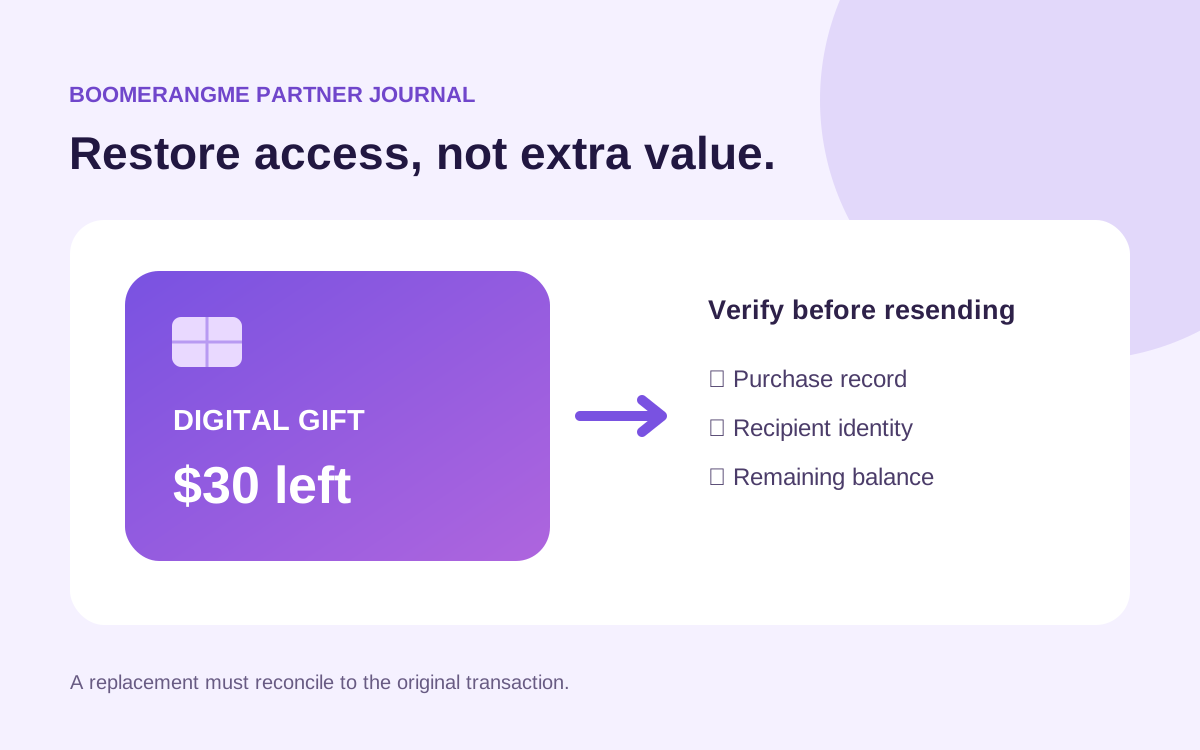
A lost gift-card link is a customer-service question and a balance-control question. Verify the original purchase before replacing access.
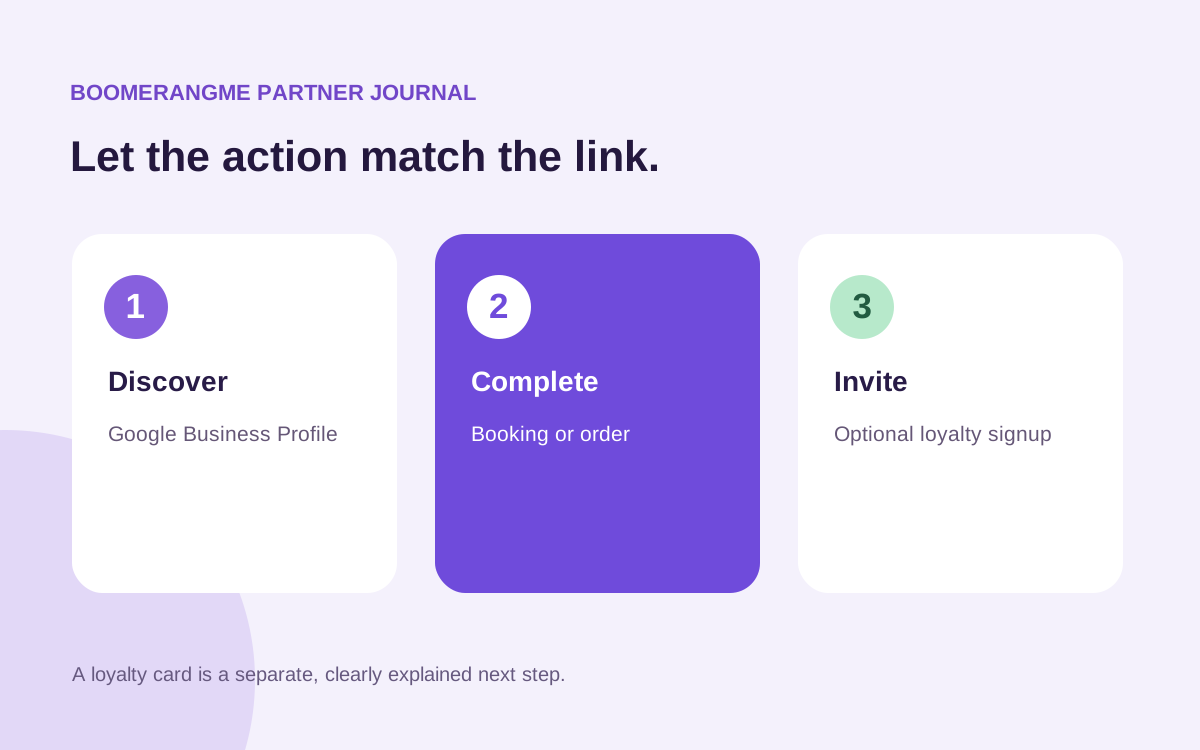
Google's booking and ordering links must complete those actions. A loyalty signup needs a suitable route on your own site, not a mislabeled action link.
Try a broader topic, or choose “All”.
Explore Boomerangme’s digital wallet cards and engagement tools. See the current features, plans, and sign-up options on the official website.